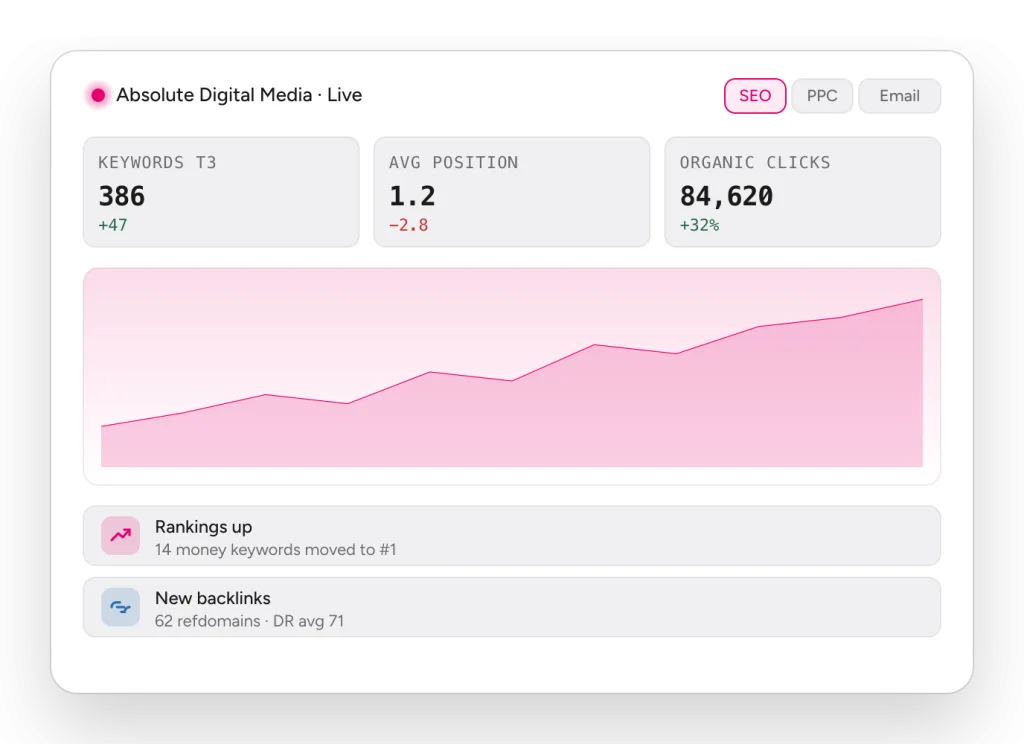
1,000 Conversions a Month From a Four-Market Paid Strategy
Vera Clinic sells treatment in Istanbul to patients across four language markets, and lost a large part of its audience targeting when Meta withdrew detailed interest segments for sensitive categories. Absolute Digital Media rebuilt the paid programme around primary audience research and market-specific campaigns.


What did Absolute Digital Media achieve for Vera Clinic?
Absolute Digital Media's PPC campaign for Vera Clinic delivered +89% total conversions year on year (Google Ads and Meta), 1,000+ tracked patient enquiries a month, +25% lead rate across all channels (year on year) and 67 Semrush tracked UK paid keywords (from 5).
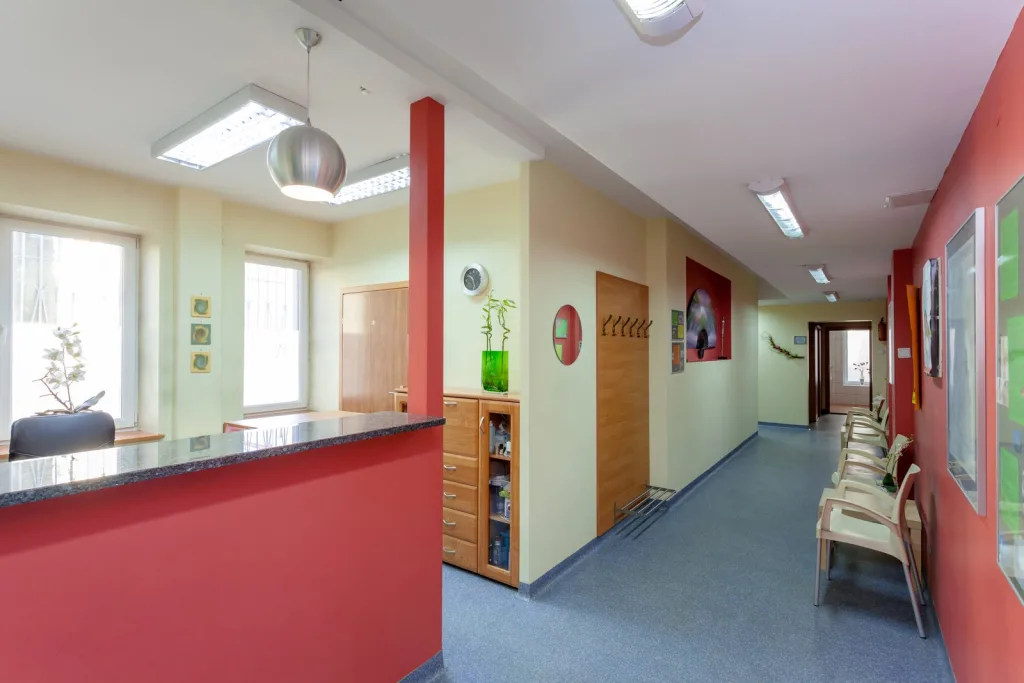
One service, four markets, patients from more than 40 countries
Vera Clinic is an international aesthetic clinic based in Istanbul, specialising in hair transplants and cosmetic treatments for patients travelling from across Europe, the United Kingdom and the Middle East.
The business operates a multilingual patient services team and treats patients from more than 40 countries, which makes its marketing multi-market rather than a single campaign translated several times. Vera Clinic has worked with Absolute Digital Media for around three years across paid media, SEO and digital PR.
Conversions up 89% with lead rate up 25%
Conversions are tracked patient enquiries across Google Ads and Meta. Performance movements compare one year of the engagement with the year before it; absolute enquiry counts, spend and cost per enquiry are not published for this account beyond the monthly volume stated. The derived traffic figure (roughly +51%) is arithmetic from the two reported movements and assumes both are measured over the same period on the same basis. Semrush figures are the UK database’s modelled estimates of text-ad keyword coverage and traffic, verified August 2026; the UK is one of four markets and the index cannot see paid social or the other three territories, so it is cited as a partial view of visibility, not as a measure of the programme.
A multi-award-winning agency
 Integrated Agency of the Year - SilverEuropean Agency Awards 2026
 Best Use of Search B2C (PPC) Small (The Swallow Co.)European Search Awards 2026
 Standout B2C Ecommerce Website of the Year (Stelrad)UK Digital Excellence Awards 2026
 Best Integrated Paid Media CampaignUK Paid Media Awards 2026
 Best New Business CampaignUK Agency Awards 2025
 Best Use Of Search (Retail/Ecommerce) - SEOUK Search Awards 2024Integrated Agency of the Year - SilverEuropean Agency Awards 2026Best Use of Search B2C (PPC) Small (The Swallow Co.)European Search Awards 2026Standout B2C Ecommerce Website of the Year (Stelrad)UK Digital Excellence Awards 2026Best Integrated Paid Media CampaignUK Paid Media Awards 2026Best New Business CampaignUK Agency Awards 2025Best Use Of Search (Retail/Ecommerce) - SEOUK Search Awards 2024
Selling one service to four markets, and the platforms stopped helping
The choices that shaped the programme



Rebuild audience targeting through primary research rather than accept the loss
When Meta removed detailed interest segments, the team produced a 20-page audience research report identifying lookalike audiences and the behaviours that correlated with conversion, and rebuilt targeting from that rather than from the platform’s remaining presets. Every advertiser in the category lost the same targeting on the same day, which made rebuilding the audience model a competitive advantage rather than a recovery exercise; absorbing the drop and blaming the platform would have left Vera Clinic level with the field.
Mine SEO data to build the paid keyword set
Keyword selection for each treatment, language and region was drawn from the organic data Absolute Digital Media already held for the client rather than from paid keyword tools alone, identifying high-intent terms that were already proving they attracted the right patients. Running search and paid separately is the default in agencies structured by channel, and it means paying to discover things the organic data already knows.
Build by country, not by language
Dedicated campaigns were created per market with copy written for that market rather than translated into it. Localisation covered the concerns specific to each audience rather than only the words. Translation makes an ad readable; it does not make it persuasive, and in medical tourism the objections a French patient raises are not the ones a patient in the UAE raises.
Build reporting before scaling spend
A custom Looker Studio dashboard was created to track conversions by country, language and campaign, giving the account visibility of which market and treatment combinations were performing before budget decisions were made. Aggregate data across four markets averages strong and weak performance into a single number that conceals both.
Who ran what
Strategy, multi-market structure, audience research and reporting, led by Tiffany Shears
Tiffany audited the account, restructured it by country and language across Google Ads and Meta, built the paid keyword set from the organic data the agency already held, produced the 20-page audience research report that replaced the targeting Meta had withdrawn, specified the Looker Studio dashboard, and ran the smart bidding launch and continuous testing that followed.
Creative and landing pages, led by Shane Fox
Market-specific creative for each territory, including the right-to-left work for the Gulf, and the landing pages matched to regional search intent that the smart bidding campaigns pointed to.
Paid keyword set built from the client's own organic data
High-intent terms that were already proving they attracted the right patients, rather than volume estimates from paid keyword tools.
Country, language and treatment-level reporting
A custom Looker Studio dashboard built before spend was scaled, so underperforming market and treatment combinations were identifiable for the first time.
Who worked on this account
Tiffany Shears leads the PPC department at Absolute Digital Media, running paid media across Google Ads, Microsoft Ads, Meta and TikTok for lead generation and eCommerce clients. She specialises in…

Edwina Lambourdiere is a Senior PPC Account Manager at Absolute Digital Media, running paid media accounts across Google Ads, Microsoft Advertising, LinkedIn Ads and Meta Ads for UK and international…

Alex is Head of Content at Absolute Digital Media, overseeing content production and ideation for regulated-sector clients in iGaming, finance, and healthcare. He specialises in creating content that performs reliably…
Shane Fox is Lead Designer at Absolute Digital Media, responsible for the agency’s creative output and for the design of everything a client actually sees: campaign creative, brand systems, landing…
Four markets managed separately, not averaged together
Total conversions rose 89% year on year, with the programme generating more than 1,000 tracked enquiries a month, and lead rate across all channels rose 25%.
The two reported figures together are the useful reading. Conversion volume nearly doubled while the rate at which traffic converted also improved, which means the account grew without diluting quality: traffic rose by about half, and the enquiries that traffic produced rose by nearly nine tenths. New markets gained traction that had not been reachable under a single international campaign structure, and wasted spend fell across both paid search and paid social as country-level visibility made underperforming combinations identifiable for the first time.
Two things made the difference. Treating a platform change as an opportunity rather than an excuse: when Meta withdrew interest targeting, every competitor in medical aesthetics lost the same capability at the same moment, and rebuilding the targeting model from behavioural data put Vera Clinic ahead of a field that had mostly absorbed the loss. And using the organic data the agency already held, an advantage only available when the channels are managed together.
| Measure | Reported | Multiple | Basis |
|---|---|---|---|
| Total conversions | +89% | 1.89x | Reported |
| Lead rate | +25% | 1.25x | Reported |
| Monthly conversion volume | More than 1,000 | Level, not a movement | Reported |
| Traffic | roughly +51% | 1.51x | Derived: conversions ÷ lead rate |
Semrush UK index, tracked paid keywords and estimated UK paid traffic: November 2023 5 / 54; January 2024 21 / 1,413; March 9 / 885; May 13 / 1,092; July 75 / 2,078; August 67 / 2,141. The UK is one market of four, the index tracks text ads on Google only, and it cannot see paid social or the French, German and Gulf activity where the larger share of the programme runs, so it is a partial view of visibility rather than a measure of the account.
What clinics and international healthcare brands should take from this
What Vera Clinic say
Multi-market healthcare PPC, answered
How should a clinic structure PPC across multiple countries?
By country, with copy written for each market rather than translated into it. Patients in different territories raise different objections about travelling for treatment, and campaign structure has to allow those to be addressed and measured separately. Vera Clinic’s account was rebuilt around dedicated market campaigns for the UK, France, Germany and the UAE.
What happened when Meta removed detailed interest targeting?
Advertisers in health and other sensitive categories lost a large part of their audience segmentation simultaneously, raising costs and reducing effectiveness. The workable response is to rebuild the targeting model from behavioural and lookalike data through primary research, which is what restored and then improved performance for Vera Clinic.
Can SEO data improve PPC performance?
Considerably, when both are managed together. Organic search data shows which terms actually attract the right patients rather than which have the most volume, and building the paid keyword set from that evidence reduces wasted spend from the outset. It is the clearest practical benefit of consolidating channels.
How do you report on a multi-market paid account?
At country, language and campaign level rather than in aggregate. Platform-level reporting averages strong and weak markets into a single figure that conceals both. A custom dashboard splitting performance by territory is the prerequisite for allocating budget between them.
Is translated ad copy good enough for international campaigns?
Rarely. Translation makes an ad readable and does not make it persuasive. Localisation means addressing the concerns specific to that audience, which in medical tourism differ significantly between European and Middle Eastern markets.
What counts as a conversion for a clinic?
A tracked patient enquiry: the action that puts a prospective patient in contact with the clinic, whether that is a form, a call or a message. It is not a click, an impression or a page view. Vera Clinic’s figures on this page are tracked enquiries across Google Ads and Meta, compared year on year.
How do you improve lead quality as well as lead volume?
By measuring at a granular enough level to see the difference. Vera Clinic’s conversions rose 89% year on year while lead rate rose 25%, which means the traffic added converted at a higher rate than the traffic before it. Growth without a rate improvement usually means quality has been diluted.
How do you measure PPC success in healthcare?
Against qualified enquiries by market and the cost of generating them, not clicks or impressions. For Vera Clinic the measures were total conversions, which rose 89% year on year, monthly conversion volume of more than 1,000, and lead rate, which rose 25%.
More case studies











Which of your markets is subsidising which?
If you market a clinic to several countries from one account, the conversation worth having is about which markets are subsidising which, and whether your reporting could currently tell you.