












Seen. Everywhere.

126% More Conversions at 45% Lower Cost Per Lead

How Absolute Digital Media rebuilt a London audiology clinic’s Google Ads account around individual services, more than doubling conversions and cutting cost per lead by 45% within three months, while reducing the account’s dependence on its own brand name.

Harley Street Hearing PPC

What did Absolute Digital Media achieve for Harley Street Hearing?

Absolute Digital Media's PPC campaign for Harley Street Hearing delivered +126% conversions (Google Ads reported), -45% cost per lead (Google Ads reported), -33% cost per click (from Quality Score not bid cuts) and +24% monthly spend (implied by the three reported movements).

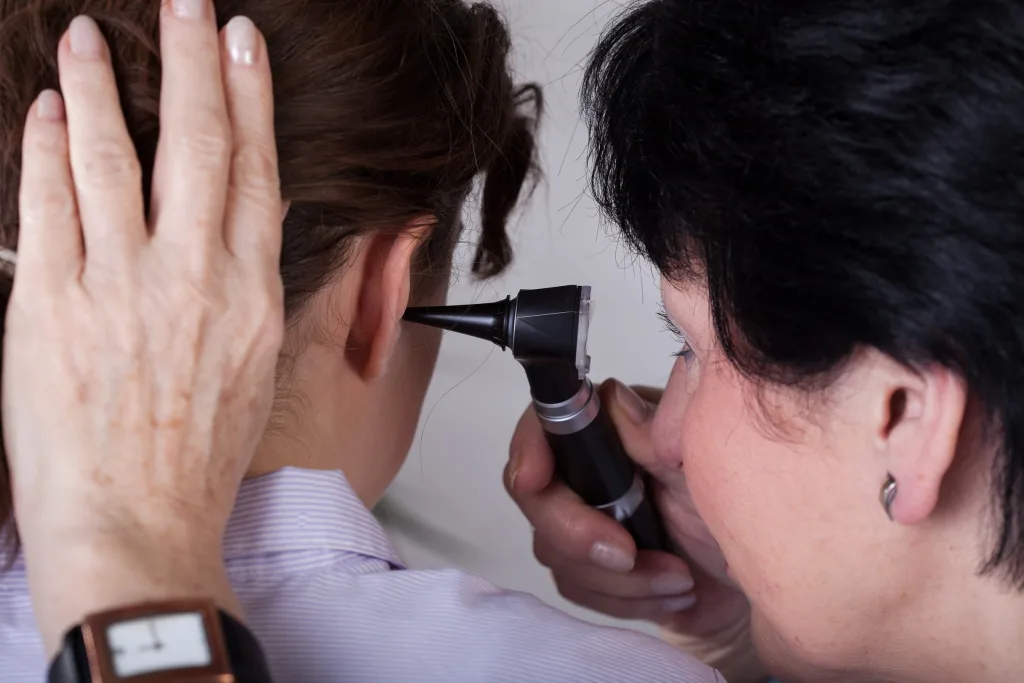
Audiology consultation at a private London clinic
The client

London's largest independent audiology clinic, buying its own name

Harley Street Hearing has been established on Harley Street for more than 25 years and is London’s largest independent hearing clinic, operating from 2 Harley Street with additional clinics across London and Greater Manchester. The practice provides hearing tests, ear wax removal by microsuction and irrigation, hearing aids from all major manufacturers, tinnitus therapy and custom hearing protection. It is also Musicians’ Hearing Services, working with Help Musicians, the Musicians’ Union and the Independent Society of Musicians, and it provides audiology to ENT consultants within HCA Healthcare UK and the Phoenix Hospital Group.

Its offline reputation is substantial. The clinic has appeared in The Sunday Times, The Telegraph, BBC Radio 2 and Channel 4’s Embarrassing Bodies, and most of its patients arrive by consultant referral or recommendation. That is the position paid search has to build on, and it is also the reason a branded account looks healthier than it is: the brand was doing the work and the ads were taking the credit.

The results

Twice the conversions at close to half the cost per lead

The window is three months within an engagement of more than four years. Performance movements are reported as percentages against the account’s own baseline; absolute conversion, cost and spend figures are not published for this account. The implied figures (spend +24%, clicks +86%, click-to-lead rate +22%) are derived from the three reported movements and assume conversions and leads are the same counted event, measured on the same basis at both ends of the window. Appointment growth is the client’s own assessment and was not measured inside Google Ads. Market volume and cost per click data are from Ahrefs, UK database, refreshed August 2026; Ahrefs reports cost per click in US dollars, converted here at $1.30 to £1 and rounded. The percentages are the client’s, the derivations are ours, and both are labelled.

+126%
Conversions, Google Ads reported
-45%
Cost per lead, Google Ads reported
-33%
Cost per click, from Quality Score not bid cuts
+24%
Monthly spend, implied by the three reported movements
Independently judged

A multi-award-winning agency

European Agency AwardsIntegrated Agency of the Year - SilverEuropean Agency Awards 2026European Search AwardsBest Use of Search B2C (PPC) Small (The Swallow Co.)European Search Awards 2026UK Digital Excellence AwardsStandout B2C Ecommerce Website of the Year (Stelrad)UK Digital Excellence Awards 2026UK Paid Media AwardsBest Integrated Paid Media CampaignUK Paid Media Awards 2026UK Agency AwardsBest New Business CampaignUK Agency Awards 2025UK Search AwardsBest Use Of Search (Retail/Ecommerce) - SEOUK Search Awards 2024European Agency AwardsIntegrated Agency of the Year - SilverEuropean Agency Awards 2026European Search AwardsBest Use of Search B2C (PPC) Small (The Swallow Co.)European Search Awards 2026UK Digital Excellence AwardsStandout B2C Ecommerce Website of the Year (Stelrad)UK Digital Excellence Awards 2026UK Paid Media AwardsBest Integrated Paid Media CampaignUK Paid Media Awards 2026UK Agency AwardsBest New Business CampaignUK Agency Awards 2025UK Search AwardsBest Use Of Search (Retail/Ecommerce) - SEOUK Search Awards 2024
The challenge

An account buying an audience it already had

The strategy

The choices that shaped the rebuild

Audiology consultation at a private London clinic
01 Decision one

Rebuild by service rather than optimise what existed

The Google Ads account was reconstructed around service-led ad groups so that wax removal, hearing tests, hearing aids and tinnitus each had their own keyword set, ad copy and budget allocation. That allowed spend to follow margin rather than volume. The rejected alternative was incremental optimisation of the existing structure: bid adjustments and negative keywords improve a well-built account and cannot fix a badly segmented one, because the underlying problem is that unrelated keywords are being served the same ad.

Audiology consultation at a private London clinic
02 Decision two

Move deliberately beyond brand

Keyword research prioritised service-specific, symptom-based and treatment-intent terms rather than variations on the clinic name. A branded campaign reports a low cost per lead because it is capturing demand the brand already created, which makes it the most flattering line in the account and the least useful. The rejected alternative was to keep weighting budget towards brand because it reported well: the metric was already good, and it was good for reasons paid search had nothing to do with.

Audiology consultation at a private London clinic
03 Decision three

Build ad copy on credibility, not price

Ads were written to lead on the differentiators that matter to a private patient choosing a clinic: the central London location, consultant audiologists and the clinic’s national media profile. In private healthcare the decision is about trust before it is about cost. The rejected alternative was discount and price-led messaging: it competes on the one dimension where a Harley Street clinic will always lose to a high street chain, and it attracts the enquiries least likely to convert into treatment.

Audiology consultation at a private London clinic
04 Decision four

Match every ad to a dedicated landing page

Each service ad group was pointed at a service-specific page rather than the homepage or a general services page. That lifted Quality Score, reduced cost per click and increased the proportion of clicks that converted. The rejected alternative was sending paid traffic to the homepage: the fastest route to launch, and it wastes the click, because a patient searching for wax removal has to find the service themselves on arrival.

The team behind the campaign

Who worked on this account

The results

The signature of a structural fix, not a bidding one

Within three months the account was producing more than twice the conversions at close to half the cost per lead. Conversions rose 126%. Cost per lead fell 45%. Cost per click fell 33%, which reflects the Quality Score improvement from tighter keyword-to-ad-to-landing-page alignment rather than any reduction in bidding. Those three movements together are the signature of a structural fix rather than a bidding one, because volume and efficiency improved at the same time.

Read together, the three figures also describe what happened to spend. Conversions up 126% at a cost per lead down 45% implies monthly spend rose around 24%; at a cost per click down 33%, that implies clicks rose around 86% and the click-to-lead rate rose around 22%. More budget went in, and it went in behind an account that was converting better, which is the only order in which increasing spend makes sense.

Lead quality improved across all priority services, measured by the clinic against its own criteria rather than on raw form fills. The clinic reports that appointments booked from paid leads rose sharply. Keyword spread widened materially, reducing the account’s dependence on branded search and increasing impression share on the non-branded service terms that represent actual new patient acquisition. The relationship has since extended: the clinic appointed Absolute Digital Media to support its in-house team on SEO alongside the paid account.

Measure Movement Source
Conversions +126% Google Ads, reported
Cost per lead -45% Google Ads, reported
Cost per click -33% Google Ads, reported
Branded share of spend Materially reduced Google Ads, reported
Appointments booked from paid leads Rose sharply Client-reported
Monthly spend +24% Implied by the reported figures
Clicks +86% Implied by the reported figures
Click-to-lead conversion rate +22% Implied by the reported figures

Three-month measurement window. The first five rows are reported; the final three are derived from them and labelled as implied rather than measured.

In their words

What Harley Street Hearing say

Frequently asked questions

Healthcare PPC, answered

How much of a healthcare PPC budget should go on branded search?

Less than most accounts spend. Branded terms capture demand your reputation already created, so they report an artificially low cost per lead and contribute little incremental revenue. A defensive allocation to protect against competitors bidding on your name is sensible. Building the account around it is not.

How quickly can a Google Ads account restructure show results?

Harley Street Hearing saw a 126% conversion increase and a 45% cost per lead reduction within three months. A rebuild delivers faster than incremental optimisation because it fixes Quality Score, keyword relevance and budget allocation simultaneously rather than one variable at a time.

Why did cost per click fall without reducing bids?

Because Quality Score improved. Tighter alignment between keyword, ad copy and landing page raises the relevance signals Google uses to price the auction, which lowers what you pay for the same position. Cost per click fell 33% across the Harley Street Hearing account on that basis.

Should each service have its own PPC campaign?

In multi-service healthcare, yes. Services carry different patient intent, different price points and different margins, and grouping them means bidding identically on enquiries worth very different amounts. Segmenting by service is what allows budget to follow value rather than volume.

What makes a good private healthcare ad?

Credibility signals rather than price. Location, clinician qualifications, professional accreditation and media or institutional recognition all reduce the perceived risk of choosing a private provider. Discount-led messaging attracts the enquiries least likely to proceed to treatment.

How do you improve lead quality rather than just lead volume?

By defining quality with the client before optimising towards it. Raw form fills are easy to increase and easy to misread. Agreeing with the clinical and commercial teams which enquiries are actually worth acquiring, then optimising towards those, is what separates a rising conversion count from rising revenue. For Harley Street Hearing the measure was appointments booked from paid leads, which rose sharply.

How much does PPC management cost for a private clinic?

Cost is driven by account complexity and the number of service lines rather than by media spend alone. A multi-service clinic needs separate campaign structures, ad groups and landing page alignment per service, which takes more building and more ongoing management than a single-service account.

How do you measure PPC success in healthcare?

Against qualified enquiries and the cost to acquire them, not clicks or impressions. For Harley Street Hearing the measures were conversion volume, which rose 126%, and cost per lead, which fell 45%, alongside the clinic’s own assessment of lead quality by service. Read together, those two figures also imply spend rose around 24%, which the account owns rather than hides.

Work with us

Good-looking numbers, no new patients?

If your paid search is producing good-looking numbers that do not translate into new patients, the conversation worth having is about how much of that spend is buying people who already knew your name. Harley Street Hearing’s growth came from spending the money on the people who did not.