41% More Leads on 19% Fewer Clicks
Montrose Glass competes for emergency glazing enquiries in an auction where rivals were steadily driving the cost of a lead upwards. Absolute Digital Media rebuilt the website alongside the Google Ads account. The growth came from converting better, not from buying more.


What did Absolute Digital Media achieve for Montrose Glass?
Absolute Digital Media's PPC campaign for Montrose Glass delivered +41% monthly conversions (1,178 to 1,660), +73% conversion rate (12.42% to 21.54%), -21% cost per lead (£15.02 to £11.94) and -19% monthly clicks (derived, c. 9,500 to c. 7,700).
A small business competing nationally
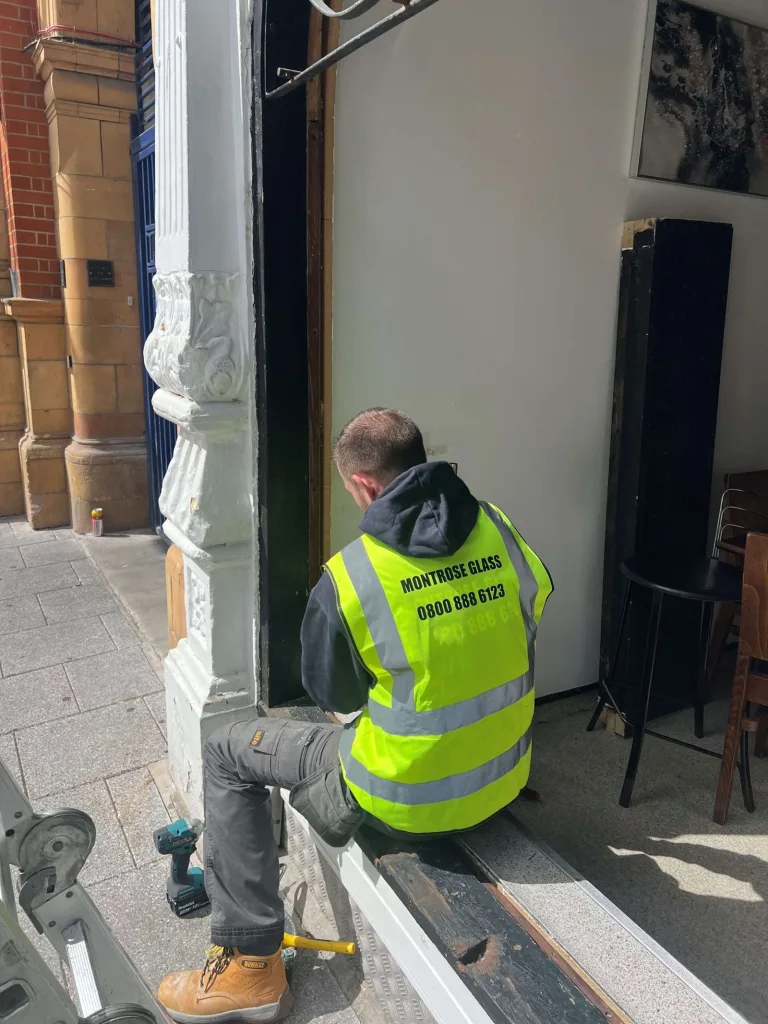
Montrose Glass is a family-run glazing business with more than 20 years of experience, providing emergency glazing, boarding up, double glazing replacement, shop front glazing and window repair to domestic and commercial properties across the UK. The business is accredited to ISO 9001 and operates 24 hours a day, every day of the year, with glaziers reaching most properties within 30 to 90 minutes and no call-out fee charged.
It is a small business competing nationally, which is an unusual position. National coverage means competing in every local auction in the country against both national rivals and local operators who only need to win in one place, and it means the cost of each click is set by whoever in that town is most willing to pay.
482 more leads a month on a fifth fewer clicks
Conversion, conversion rate and cost per lead figures are from Absolute Digital Media campaign reporting in Google Ads, comparing a monthly baseline before the rebuild with a month after it. Clicks are derived by dividing conversions by conversion rate, spend by multiplying conversions by cost per lead, and cost per click by dividing spend by clicks. All derived figures are rounded and labelled as derived throughout. The derived cost per click (up around 38%, from roughly £1.87 to roughly £2.57) is the measure of the auction inflation the account was working against.
A multi-award-winning agency
 Integrated Agency of the Year - SilverEuropean Agency Awards 2026
 Best Use of Search B2C (PPC) Small (The Swallow Co.)European Search Awards 2026
 Standout B2C Ecommerce Website of the Year (Stelrad)UK Digital Excellence Awards 2026
 Best Integrated Paid Media CampaignUK Paid Media Awards 2026
 Best New Business CampaignUK Agency Awards 2025
 Best Use Of Search (Retail/Ecommerce) - SEOUK Search Awards 2024Integrated Agency of the Year - SilverEuropean Agency Awards 2026Best Use of Search B2C (PPC) Small (The Swallow Co.)European Search Awards 2026Standout B2C Ecommerce Website of the Year (Stelrad)UK Digital Excellence Awards 2026Best Integrated Paid Media CampaignUK Paid Media Awards 2026Best New Business CampaignUK Agency Awards 2025Best Use Of Search (Retail/Ecommerce) - SEOUK Search Awards 2024
The auction was getting more expensive and the business could not outspend it
The choices that shaped the engagement



Rebuild the website, not only the account
An updated web design was developed with mobile-first responsiveness, conversion rate optimisation and overall user experience as the priorities, on the basis that the constraint sat after the click rather than before it. The rejected alternative was optimising the account alone: when cost per click is rising and outside your control, conversion rate is the only lever left, and conversion rate is decided on the website rather than in the ad platform.
Remove location targeting from the ads and landing pages
Analysis found that the dynamic location-based landing pages were not being served to the right users, so the location element was removed from both the ads and the pages and the experience was standardised. Conversion rate rose as a result. The rejected alternative was keeping dynamic location insertion because it is standard practice in local services. It is standard practice, it usually works, and in this account it was demonstrably not working. Testing the assumption rather than inheriting it is what produced the gain.
Separate emergency from non-emergency budgets
Distinct budgets were assigned to emergency and non-emergency services so that each could be funded and measured according to its own economics rather than competing for the same pool. The rejected alternative was a single account budget optimised on blended cost per lead: a blended figure averages an urgent, high-intent, immediately converting enquiry with a slow comparison-shopping one, and produces a number that describes neither.
Track daily rather than review monthly
Daily trackers monitored fluctuations in clicks and conversions, allowing changes to ad copy and campaign settings to be made against live movement instead of at the end of a reporting cycle. The rejected alternative was a monthly optimisation rhythm: in a category where competitor bidding shifts costs week to week and demand spikes with weather and break-ins, a month is long enough for a problem to consume a meaningful share of the annual budget.
Who ran what
Paid search strategy and account restructure, led by Tiffany Shears
The diagnosis that the constraint sat after the click, the test that removed dynamic location insertion, and the separation of emergency and planned work into budgets measured on their own economics. Each decision was made against a standard practice the category follows without checking.
Campaign management and daily optimisation, led by Tiffany Shears
Daily tracking of clicks and conversions across both budgets, with ad copy and settings changed against live movement rather than at month end. In an auction that reprices week to week, the cadence is the control.
Website redesign and conversion optimisation, led by Shane Fox
The site rebuilt mobile-first for the conditions it actually operates in: one-handed, at night, by someone dealing with something that has gone wrong. Tap targets, the distance from the top of the screen to the phone number, and the removal of the mis-served location pages were design decisions, and a conversion rate of 21.54% is their measure.
Budget segmentation by urgency
Emergency and planned glazing funded and measured separately, so the profitable urgent enquiries were not crowded out by slower comparison shoppers.
Who worked on this account

Tiffany Shears leads the PPC department at Absolute Digital Media, running paid media across Google Ads, Microsoft Ads, Meta and TikTok for lead generation and eCommerce clients. She specialises in…

Edwina Lambourdiere is a Senior PPC Account Manager at Absolute Digital Media, running paid media accounts across Google Ads, Microsoft Advertising, LinkedIn Ads and Meta Ads for UK and international…

Alex is Head of Content at Absolute Digital Media, overseeing content production and ideation for regulated-sector clients in iGaming, finance, and healthcare. He specialises in creating content that performs reliably…

Shane Fox is Lead Designer at Absolute Digital Media, responsible for the agency’s creative output and for the design of everything a client actually sees: campaign creative, brand systems, landing…
More leads, cheaper, from less traffic
Monthly conversions rose from 1,178 to 1,660, an increase of 41%. Conversion rate rose from 12.42% to 21.54%, an increase of 73%. Cost per lead fell from £15.02 to £11.94, a reduction of 21%.
Working from those figures, monthly clicks fell from roughly 9,500 to roughly 7,700, a reduction of around 19%. The business generated 482 additional leads a month while buying about a fifth fewer clicks, which means every part of the improvement came from converting better rather than from buying more.
The same arithmetic shows what the account was working against. Spend moved from roughly £17,700 to roughly £19,800 a month, up around 12%, and across a fifth fewer clicks that puts cost per click up around 38%, from roughly £1.87 to roughly £2.57. That is the auction inflation, measured. An account holding cost per lead flat against it would have been performing well. Cutting it by 21% while volume rose 41% means the conversion rate improvement outran the auction working against it, with room to spare.
| Measure | Start | End | Movement |
|---|---|---|---|
| Monthly conversions | 1,178 | 1,660 | +41% |
| Conversion rate | 12.42% | 21.54% | +73% |
| Cost per lead | £15.02 | £11.94 | −21% |
| Monthly clicks, derived | c. 9,500 | c. 7,700 | −19% |
| Monthly spend, derived | c. £17,700 | c. £19,800 | +12% |
| Cost per click, derived | c. £1.87 | c. £2.57 | +38% |
The first three rows are reported from Google Ads. Clicks, spend and cost per click are derived from them and are labelled as derived wherever they appear.
What emergency and home service businesses should take from this
Home services PPC, answered
How do you reduce cost per lead when competitors are pushing prices up?
By improving conversion rate, because the auction price is not within your control and the proportion of clicks that convert is. Montrose Glass’s cost per lead fell 21% while conversion rate rose 73%, achieved largely through a website rebuild rather than through changes in the ad account.
Should a PPC agency work on your website?
When conversion rate is the constraint, it is the only work that matters. Montrose Glass generated 41% more leads from roughly 19% fewer clicks, which means every part of the gain came from the site converting better. An agency limited to the ad platform cannot access that.
Should emergency and non-emergency services share a PPC budget?
No. They have different customers, different decision timescales and different values, and a shared budget means slow comparison-shopping enquiries can consume the money before urgent high-intent ones arrive. Separate budgets allow each to be measured and funded on its own economics.
Does dynamic location insertion always improve local services PPC?
Not always. In the Montrose Glass account, dynamic location landing pages were not being served to the right users, and removing the location element from both ads and pages improved conversion rate. It is a standard practice worth testing rather than assuming.
What conversion rate should a home services PPC account expect?
It varies widely by service and urgency, so compare against your own baseline rather than a benchmark. Montrose Glass moved from 12.42% to 21.54%, which is the useful measure because it is the same business before and after.
How often should a PPC account be reviewed?
Daily in volatile categories. Emergency services demand fluctuates with weather, seasonality and competitor bidding, and a monthly review cycle allows a problem to persist long enough to consume a meaningful share of the budget before anyone sees it.
Why did clicks fall while leads rose?
Because the account stopped buying clicks that were not converting and the site converted a far higher proportion of the ones it did buy. Clicks fell around 19% while conversions rose 41%, which is only possible when conversion rate moves substantially, in this case from 12.42% to 21.54%.
How do you measure PPC success in emergency trades?
Against enquiries and the cost of generating them, read alongside what the auction did. Montrose Glass’s cost per lead fell 21% while the derived cost per click rose around 38%, which is what shows the improvement came from the business’s own side of the click rather than from a cheaper market.
More case studies












Is your cost per lead climbing whatever you do?
If competitors are driving your cost per click up, the conversation worth having is not about bids. It is about what proportion of those clicks your website turns into enquiries.