Having worked with multiple agencies in the past, I can honestly say it is a breath of fresh air working with Absolute Digital Media. They took control of my campaign from day one, planned out exactly what needed to be done after working with me on realistic KPIs with a tall ask. They are always advising me on the best approach, and keeping me well informed. The results have been nothing short of amazing. I would highly recommend Absolute Digital Media.
New Bookings Up 206% and Organic Traffic Up 418%
New bookings up 206% and organic traffic up 418%. Symptom-led content for a private dental practice competing in one of the densest local healthcare markets in the UK.


What did Absolute Digital Media achieve for Smile Cliniq?
Absolute Digital Media's SEO campaign for Smile Cliniq delivered +206% new bookings, 17,106 monthly organic sessions (from 3,300), 811 keywords in the top three (from 70) and +38% on-site conversion rate.

A private dental practice in one of the UK's densest local markets
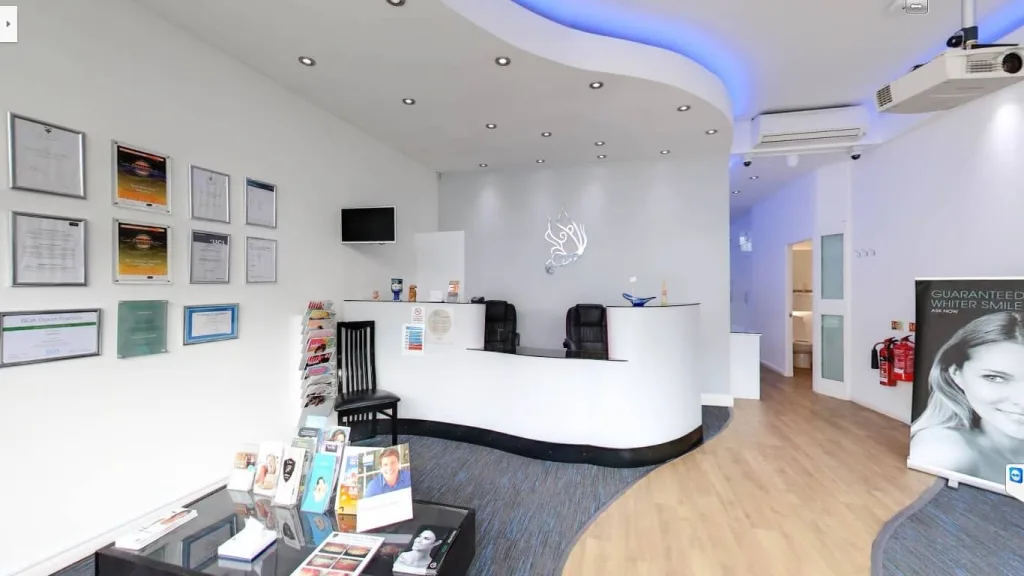
Smile Cliniq is a private dental practice operating from two London locations, in Finchley and St John’s Wood, offering general and cosmetic dentistry alongside specialist treatments, with the clinical standards and reputation to compete at the top of its market.
The commercial position is a common one for private healthcare and it creates a specific search dynamic. The practice serves a defined catchment, competes locally against dozens of other practices, and sells treatments that patients rarely search for by name. Very few people wake up looking for gingival veneers or pinhole gum surgery. They wake up with a symptom.
New bookings up 206%, organic traffic up 418%
Traffic and keyword figures are from Ahrefs Site Explorer, UK database. Booking and conversion figures are drawn from the client’s own reporting. Both sources agree on direction and scale.
A multi-award-winning agency
Integrated Agency of the Year - SilverEuropean Agency Awards 2026
Best Use of Search B2C (PPC) Small (The Swallow Co.)European Search Awards 2026
Standout B2C Ecommerce Website of the Year (Stelrad)UK Digital Excellence Awards 2026
Best Integrated Paid Media CampaignUK Paid Media Awards 2026
Best New Business CampaignUK Agency Awards 2025
Best Use Of Search (Retail/Ecommerce) - SEOUK Search Awards 2024
Integrated Agency of the Year - SilverEuropean Agency Awards 2026
Best Use of Search B2C (PPC) Small (The Swallow Co.)European Search Awards 2026
Standout B2C Ecommerce Website of the Year (Stelrad)UK Digital Excellence Awards 2026
Best Integrated Paid Media CampaignUK Paid Media Awards 2026
Best New Business CampaignUK Agency Awards 2025
Best Use Of Search (Retail/Ecommerce) - SEOUK Search Awards 2024 Four constraints on a local dental campaign
The choices that shaped the account

Build for the symptom, not for the treatment
The decision that produced the growth was to write for what the patient is experiencing rather than for what the practice offers. The rejected alternative is what almost every dental site does: a page per treatment, optimised for the treatment name, competing locally with every other practice doing the same. The larger opportunity sits earlier. Someone whose gums are receding, whose teeth suddenly hurt, or who wants to know how long the numbness lasts, is looking for an answer rather than a dentist. The receding gums article reached position eight on a term carrying 20,000 monthly searches. Articles on sudden tooth pain, dental anaesthesia and vaping all reached position three on terms carrying 1,000 to 1,200 searches, and several pages reached position one. None of those pages existed before the campaign.

Let the symptom content carry the treatment pages
Symptom content on its own generates reading rather than bookings, and a practice serving two London postcodes cannot convert a national audience. The pages were built to route deliberately into the relevant treatment page, so a reader who recognises what they are experiencing arrives at the page describing what can be done about it. The gum recession page holds position one for pinhole gum surgery and grew its ranking keyword set from 106 to 306, and the gingival veneers page holds position one and went from 8 monthly sessions to 344. That routing is also why the conversion rate rose 38% as a large volume of informational traffic arrived.

Write to the regulatory standard first
Dental content sits under General Dental Council guidance and advertising standards. Content was written to that standard from the brief rather than edited towards it afterwards, because content corrected for compliance after drafting loses the specificity it was built on. It is also what the search engines want: health content is assessed against expertise and accuracy criteria that commercial categories are not, so writing to a clinical standard and writing to rank point in the same direction.

Work the Google Business Profile as an active channel
Local healthcare search is decided substantially in the map pack, and a profile that is actively maintained outperforms one that is merely complete. The practice’s profile was worked as a channel, with regular posts and high resolution photography uploaded on an ongoing basis. It is low-cost, routine work that most practices set up once and never touch again.

Sequence the technical work first
A full site audit and keyword mapping file were produced at the outset, and the technical, content and link building work was scheduled in priority order rather than run in parallel at equal weight. Site speed and structure were addressed before the content programme scaled, because content built on a site that cannot be crawled or served quickly is capped before it starts.
Who ran what
SEO strategy, led by Ben Austin
Ben set the symptom-first architecture and the routing model that carried it: which patient questions to own, which treatment page each one feeds, and the order in which technical, content and link work would run. The keyword mapping produced at the outset governed every page built across the campaign, and the routing model is why a national informational readership converted into local appointments rather than sitting as traffic.
Content, led by Alex Stott
Alex’s team built the symptom estate: articles answering the questions patients actually ask about receding gums, sudden tooth pain, dental anaesthesia and dozens more, each written to General Dental Council guidance from the brief and each routing into the treatment page it serves. The treatment pages themselves were rebuilt to the same standard, which is how the gingival veneers page went from 8 monthly sessions to 344 and position one.
Digital PR and outreach, led by Jack Hawtin
Jack built the link profile behind the campaign: editorial placements on relevant health and lifestyle titles pointing at the pages doing the commercial work, alongside citation consistency across the local ecosystem that feeds the map pack. Every placement was selected for relevance to the symptom and treatment content it supports, and the top-three keyword count rising from 70 to 811 is the profile doing its job.
Technical SEO, led by Shofiur Rahman
Shofiur delivered the full technical audit that opened the campaign, then the remediation in priority order: site speed, crawl and indexation, and the structural rebuild of internal linking across the main category pages so that equity flows from the symptom content into the treatment pages. That structure is the mechanism behind the routing, and it was in place before the content programme scaled.
Who worked on this account
What the campaign achieved
Organic traffic grew from 3,300 to a peak of 17,106 monthly sessions, an increase of 418%. Keywords in the top three grew from 70 to 811, and positions four to ten from 226 to 1,327. New bookings rose 206% and on-site conversion rate rose 38% on the client’s own analytics, with organic users up 104%. The Ahrefs and client-side figures agree on direction and scale.
The gingival veneers page went from 8 monthly sessions to 344, and the composite bonding gallery from 52 to 821. Both are treatment pages, lifted by the symptom content routing into them.
| Page | Lead keyword | Monthly volume | Position |
|---|---|---|---|
| Gum recession treatment | pinhole gum surgery | 300 | 1 |
| Gingival veneers | gingival veneers | 350 | 1 |
| Toothache and headache | toothache and headache | 300 | 1 |
| Loose tooth in adults | stages of a loose tooth in adults | 600 | 1 |
| Tooth pain and colds | sore teeth with cold | 300 | 1 |
| Composite bonding gallery | before and after composite bonding | 2,700 | 3 |
| Sudden tooth pain | why do all my teeth hurt suddenly | 1,200 | 3 |
| Dental anaesthesia | how long does dental numbing last | 1,100 | 3 |
| Vaping and dental health | can dentists tell if you vape | 1,000 | 3 |
| White gums | white gums | 2,400 | 7 |
| Receding gums | receding gums | 20,000 | 8 |
Source: Ahrefs Site Explorer, UK database.

What private healthcare practices should take from this
What Smile Cliniq say
Dental SEO, answered
How should a dental practice approach SEO?
By building for symptoms as well as treatments. Patients search for what is hurting rather than for the procedure that fixes it, and symptom content reaches them far earlier and faces far less competition than the treatment terms every local practice is contesting.
Do informational articles actually generate patient bookings?
Only if they route into the treatment pages deliberately. On this account the symptom content lifted the treatment pages beneath it, with the gingival veneers page growing from 8 monthly sessions to 344 and new bookings rising 206%.
Will symptom content bring traffic from outside the catchment?
Some of it, and that is acceptable when the local pages convert. The measure that matters is bookings rather than sessions. Conversion rate rose 38% alongside the traffic growth here, which shows the routing worked rather than the audience being wasted.
What role does link building play in local healthcare SEO?
A targeted one. Editorial placements on relevant health titles and consistent citations across the local ecosystem support the pages doing the commercial work and the map pack presence. Relevance decides whether an acquired link moves rankings in healthcare, and on this campaign the link profile sat behind top-three keywords growing from 70 to 811.
How do you keep dental content compliant?
By writing to General Dental Council guidance and advertising standards from the brief rather than editing towards them afterwards. Content drafted for performance and corrected later loses the specificity it was built on. In health categories the compliance standard and the search quality standard largely agree.
Does the Google Business Profile still matter?
Substantially, in local healthcare. The map pack decides a large share of local enquiries, and an actively maintained profile with regular posts and current photography outperforms one that is complete and untouched. Most practices set it up once and leave it.
More case studies
Ready to grow like Smile Cliniq?
Patients search for what is hurting, not for the treatment that fixes it. Book a consultation and we will show you where the biggest gains are.