Position One for “Radiators” and Organic Traffic Up 575%
Position one for “radiators” against the entire retail sector, organic traffic up 575%, and the £1 million revenue objective passed. How a manufacturer beat its own resellers.


What did Absolute Digital Media achieve for Stelrad?
Absolute Digital Media's SEO campaign for Stelrad delivered +575% organic traffic (21,760 to 146,911 sessions), +96% revenue (past the £1 million objective), +205% transactions and +111% ecommerce conversion rate.
The manufacturer competing against everyone who resells it
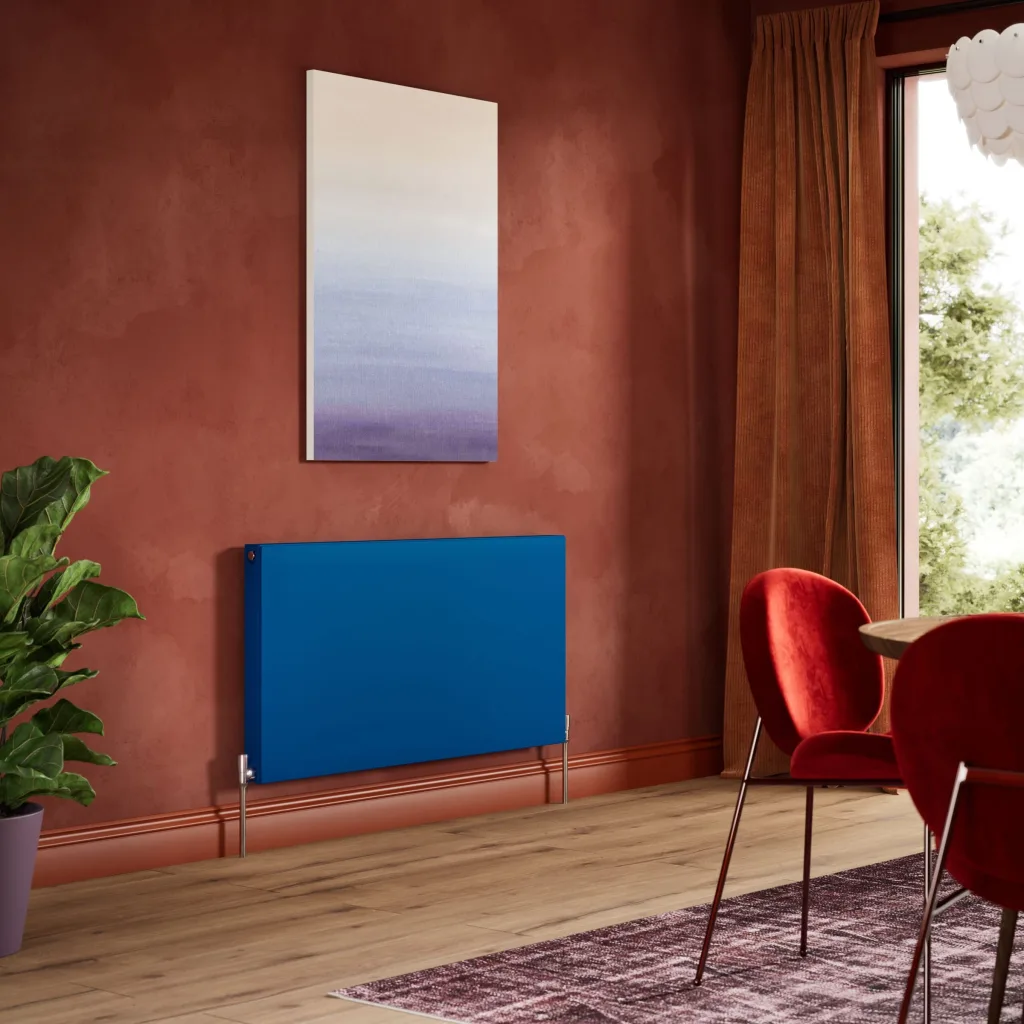
Stelrad is the UK’s leading radiator manufacturer, supplying homeowners and trade professionals across a range spanning compact panel radiators through to designer, column, vertical and electric products.
The commercial position is unusual and it defines the search opportunity. Stelrad makes the product that everyone else resells. Every national retailer, plumbing merchant and online bathroom specialist in the country is competing for the same searches, most of them selling Stelrad’s own products, and all of them structurally resourced for ecommerce search in a way a manufacturer traditionally is not. Stelrad came to Absolute Digital Media with one objective stated plainly: break £1 million in revenue through organic growth.
Position one for radiators, traffic up 575%
Traffic, keyword and Domain Rating figures are from Ahrefs Site Explorer, UK database. Revenue, transaction and conversion figures are drawn from the client’s own reporting. Both sources agree on direction and scale.
A multi-award-winning agency
 Integrated Agency of the Year - SilverEuropean Agency Awards 2026
 Best Use of Search B2C (PPC) Small (The Swallow Co.)European Search Awards 2026
 Standout B2C Ecommerce Website of the Year (Stelrad)UK Digital Excellence Awards 2026
 Best Integrated Paid Media CampaignUK Paid Media Awards 2026
 Best New Business CampaignUK Agency Awards 2025
 Best Use Of Search (Retail/Ecommerce) - SEOUK Search Awards 2024Integrated Agency of the Year - SilverEuropean Agency Awards 2026Best Use of Search B2C (PPC) Small (The Swallow Co.)European Search Awards 2026Standout B2C Ecommerce Website of the Year (Stelrad)UK Digital Excellence Awards 2026Best Integrated Paid Media CampaignUK Paid Media Awards 2026Best New Business CampaignUK Agency Awards 2025Best Use Of Search (Retail/Ecommerce) - SEOUK Search Awards 2024
Four constraints on a manufacturer in a retail category
The choices that shaped the account


Contest the retail terms as a manufacturer
The decision that shaped everything was to compete directly for the category terms rather than retreating to brand and product-code searches. A manufacturer’s obvious defensive position is to own its own name and model numbers and leave the generic terms to the retailers who sell them. It is comfortable, and it caps the business at the size of its existing brand demand. We went at the category terms instead, on the argument that a manufacturer has something no retailer can reproduce: the specification, the engineering rationale, the sizing data, the output figures and the technical answers behind every product. A retailer’s category page is a filtered product grid. A manufacturer’s category page can be the definitive explanation of what the product type is, who it suits and how to specify it correctly. The radiators category page moved from 4,079 monthly sessions to 51,687 and holds position one on a term carrying 34,000 monthly searches.
Build 154 pages, but only after resolving the overlap
Content was created at scale, 154 new pages across category and range, but the cannibalisation audit came first. Adding 154 pages to a site where category and product pages already compete for the same queries multiplies the conflict rather than solving it. The audit established which page owned which intent, and every new page was built into a resolved structure with its own defensible query set. That is why the estate grew from 974 top-ten rankings to nearly 5,000 rather than redistributing the ones it had.
Own the tools, not just the products
The heating category has a specific pre-purchase behaviour: before anyone buys a radiator they need a BTU or heat loss calculation, and those searches happen before any product decision is made. We built and optimised for that layer. The tools now rank third for “btu calculator” on 11,000 monthly searches, first for “radiator size calculator” and second for “heat loss calculator”. This is the most valuable position in the funnel and retailers rarely hold it, because a calculator is a technical asset rather than a merchandising one. Capturing the customer at the specification stage means being present before the comparison starts.
Restructure the URLs and accept the disruption
A cleaner, more intuitive URL hierarchy was recommended and implemented, reorganising the range so that product types, colours and specifications sit in a logical structure. Restructuring URLs on a large commercial site is disruptive, carries short-term risk, and is the recommendation most agencies avoid making because it creates work and anxiety for everyone. It is also the thing that determines whether a large product estate can scale in search. The subcategory pages built into that structure, black radiators, slim flat panel, electric, are now among the strongest pages on the site, and several did not exist as ranking pages before it.
Point digital PR at the revenue pages
Outreach and digital PR were directed at building authority for the specific pages driving revenue rather than spread evenly across the domain. Domain Rating rose seven points across the campaign, from 57 to 64, and because the gains were concentrated on the pages contesting the valuable positions, that authority landed where the competition was decided: the category pages that now hold position one against retailers with far larger overall link profiles.
Who ran what
SEO strategy, led by Ben Austin
Ben set the central call, contesting the retail terms as a manufacturer, and the sequencing that made it work: cannibalisation resolved first, structure rebuilt second, content scaled third, digital PR concentrated on the pages carrying revenue. The keyword and intent mapping assigned every query set to one owning page across the estate, which is the discipline that turned 154 new pages into new visibility.
Content, led by Alex Stott
Alex’s team produced the 154-page programme across category and range: definitive category explanations built on Stelrad’s own specification, sizing and engineering data, subcategory pages for types, colours and finishes, and the technical content behind the calculator layer. Each page was written into its assigned query set from the audit, which is why the radiators category page grew from 4,079 monthly sessions to 51,687.
Digital PR and outreach, led by Jack Hawtin
Jack directed the authority build at the pages doing the commercial work, lifting Domain Rating from 57 to 64 with campaigns and placements pointed at the category and calculator pages rather than spread across the domain. Concentrating the gains where the positions were contested is what let a manufacturer hold position one on “radiators” against retail competitors with far larger overall link profiles.
Technical SEO, led by Shofiur Rahman
Shofiur engineered the structural work the campaign stood on: the URL hierarchy rebuild organising the range by product type, colour and specification, crawl and indexation remediation so every page in the estate could be reached and served, and the internal linking that lets equity flow from the category layer through to product. The restructure is the reason the subcategory pages could rank at all.
Who worked on this account

Lewis Esson is Head of SEO at Absolute Digital Media, leading a team of seven across organic strategy for gambling, lending, adult and regulated ecommerce brands. He joined ADM as…

Shofiur Rahman is Head of Technical at Absolute Digital Media, leading the team responsible for everything the agency builds and runs: client websites, internal applications, infrastructure, AI systems and the…

Alex is Head of Content at Absolute Digital Media, overseeing content production and ideation for regulated-sector clients in iGaming, finance, and healthcare. He specialises in creating content that performs reliably…

Jack Hawtin leads the outreach team at Absolute Digital Media, running link building and outreach strategy mainly for iGaming clients, alongside adult industry brands, interior design, and a smaller portfolio…
What the campaign achieved
Organic traffic grew from 21,760 to a peak of 146,911 monthly sessions, a 575% increase, and currently runs above 127,000. Keywords in the top three grew from 332 to a peak of 2,354, and positions four to ten from 642 to 2,829. Revenue rose 96%, transactions rose 205% and the ecommerce conversion rate rose 111% on the client’s own analytics, taking the business past its £1 million objective. Domain Rating rose from 57 to 64, with the digital PR gains concentrated on the pages that decided the contested positions.
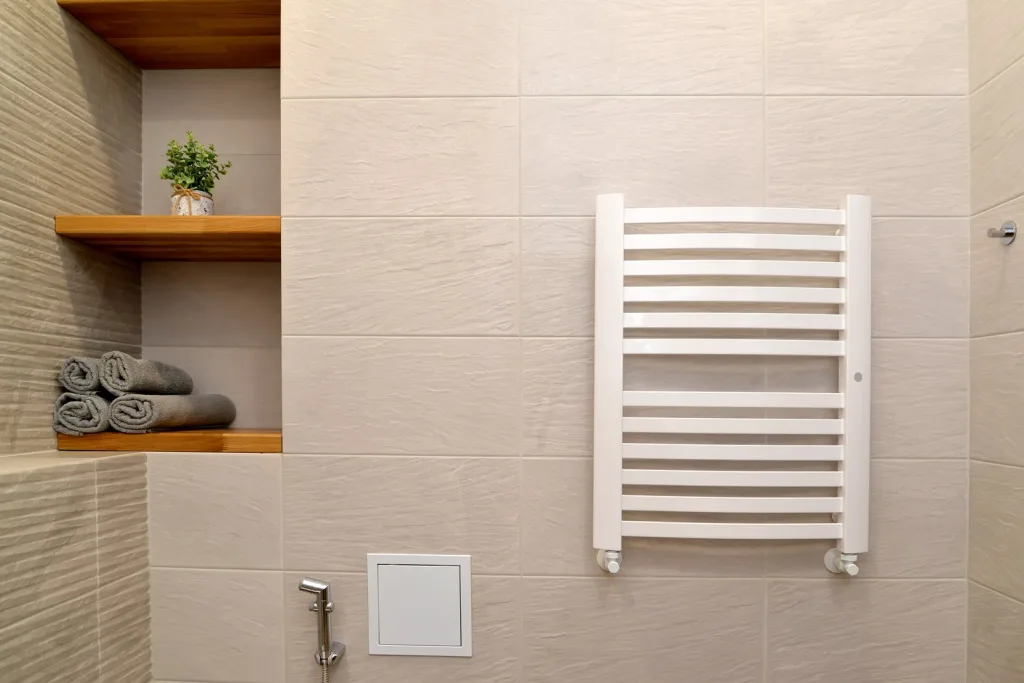
The scale of the movement is in the page-level numbers. The radiators category page went from 4,079 monthly sessions to 51,687. The towel rail page went from 104 to 4,665. The slim flat panel page went from 4 to 1,104. Electric radiators and black radiators were new ranking pages and now hold first and fourth on terms carrying 13,000 and 12,000 monthly searches.
The AI visibility position
The same specification depth that won the category terms has made Stelrad the source AI assistants cite. Ahrefs records 1,682 citations of stelrad.com across the seven major AI platforms in the UK: 499 in Google AI Mode drawn from 217 distinct pages, 269 in Google AI Overviews from 137 pages, 251 in ChatGPT, 222 in Grok, 193 in Perplexity, 184 in Gemini and 64 in Copilot.
The cause and effect is direct. Someone asking an assistant what size radiator a room needs, or what separates a K2 from a K3, receives an answer assembled from whoever states it precisely, and the calculators, sizing data and category explanations built across this campaign are that source. The pages built to win the search terms are the same pages the assistants cite, which is why the AI optimisation work and the SEO programme compound rather than compete.
| Page | Lead keyword | Monthly volume | Position |
|---|---|---|---|
| Radiators | radiators | 34,000 | 1 |
| Electric radiators | electric radiators | 13,000 | 1 |
| Slim flat panel radiators | slim radiators | 1,100 | 1 |
| Radiator size search | radiator size calculator | 1,900 | 1 |
| Column radiators | column radiators | 9,300 | 2 |
| Vertical radiators | vertical radiators | 10,000 | 2 |
| Heat loss calculator | heat loss calculator | 1,300 | 2 |
| BTU calculator | btu calculator | 11,000 | 3 |
| Black radiators | black radiator | 12,000 | 4 |
| Towel rail radiators | towel radiator | 13,000 | 4 |
Source: Ahrefs Site Explorer, UK database. AI citations: Google AI Mode 499 (217 pages), Google AI Overviews 269 (137), ChatGPT 251 (101), Grok 222 (143), Perplexity 193 (106), Gemini 184 (75), Copilot 64 (44). Ahrefs Site Explorer, AI citations, UK.
What manufacturers should take from this
What Stelrad say
Manufacturing SEO, answered
Should a manufacturer compete with the retailers who sell its products?
In organic search, yes. The defensive alternative, owning only brand and product-code terms, caps the business at its existing demand. A manufacturer holds the specification, sizing and engineering detail that a retailer’s filtered product grid cannot match, which is what allows a category page to outrank the entire retail sector.
How do you publish content at scale without creating cannibalisation?
By auditing and resolving the existing overlap before writing anything. Each page needs an assigned intent and a defensible query set before new pages join the estate. On this account 154 new pages were built into a resolved structure, which is why the top-ten keyword base grew fivefold rather than churning.
Is restructuring URLs on a large site worth the disruption?
On a large product estate, usually yes. An unclear hierarchy caps how well a range can be understood and scaled in search, and no amount of content fixes it. Several of the strongest pages on this site are subcategory pages that only became possible after the restructure.
What are specification tools worth in a technical category?
They capture the customer before the product decision exists. In heating, sizing has to be calculated before anything can be bought, so the calculator ranks ahead of the purchase. Those tools here rank first, second and third on their respective terms, including a calculator term carrying 11,000 monthly searches.
Should digital PR be pointed at the homepage or at commercial pages?
At the pages that drive revenue. Distributed authority across a domain produces a uniform lift that changes nothing competitive. Concentrated on the pages contesting valuable positions, the same investment can decide those positions. On this campaign Domain Rating rose seven points with the gains pointed at the category pages that now hold position one.
How long does a large-scale content programme take to show revenue?
Ranking movement appeared within two quarters of the first phase landing, with the largest gains arriving across the following eighteen months as the content estate matured and the restructure settled. Revenue effect lags rankings by roughly a quarter in considered purchase categories.
How does a brand get cited by AI assistants in a product category?
By publishing the precise technical answer the assistant needs. Assistants assemble answers from whoever states specification, sizing and product differences exactly, and stelrad.com now carries 1,682 citations across ChatGPT, Google AI Overviews, Google AI Mode, Gemini, Perplexity, Copilot and Grok in the UK. The content built to win the category terms is the same content the assistants cite.
Does organic search work for trade as well as consumer audiences?
Both, and they behave differently. Trade professionals search by specification and product code while homeowners search by product type and appearance. A range estate structured to serve both, with specification depth underneath, captures the two without needing separate sites.
More case studies












Ready to grow like Stelrad?
If your resellers outrank you for the product you make, the gap is content depth rather than authority. Book a consultation and we will show you where the biggest gains are.